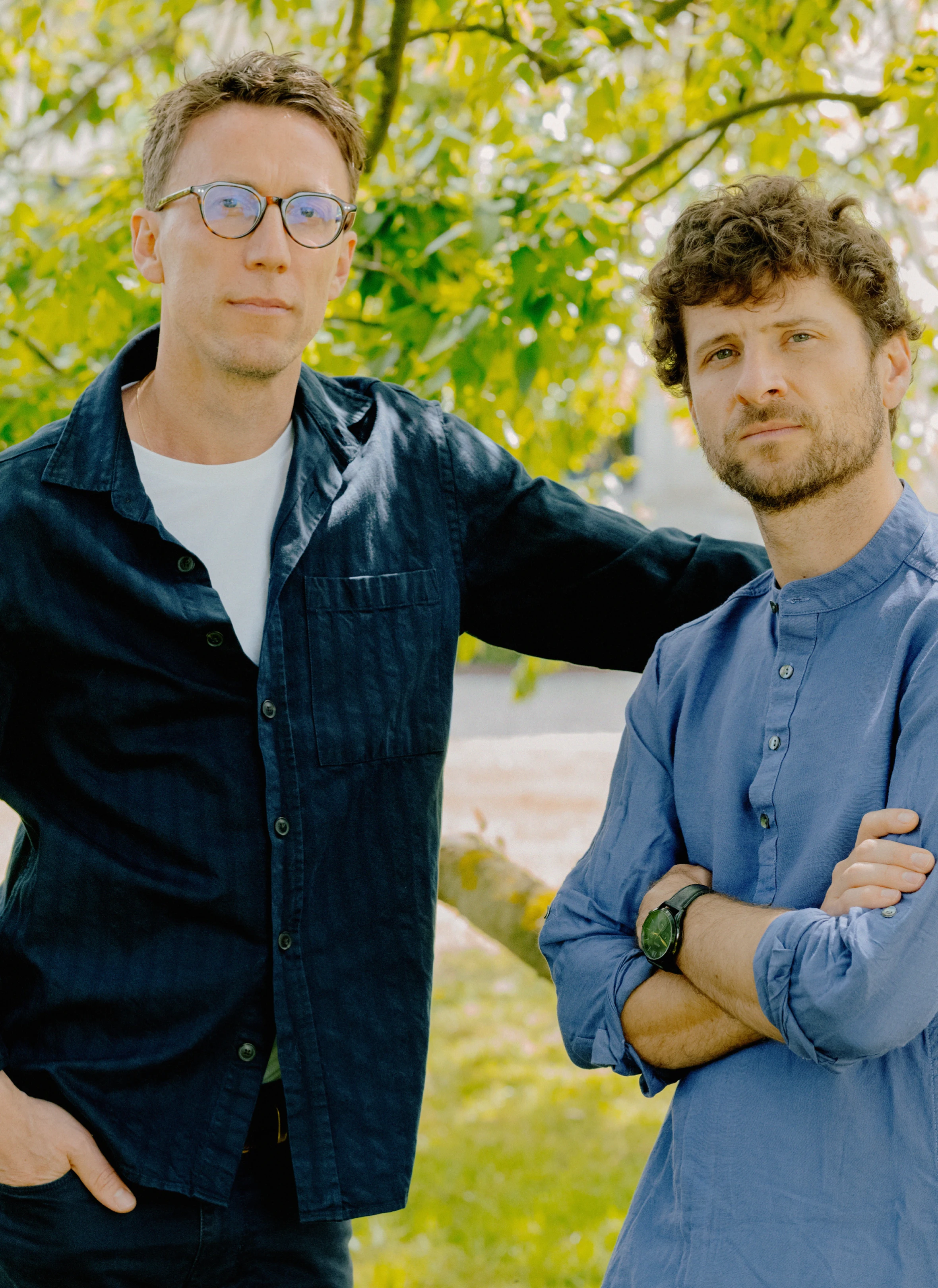
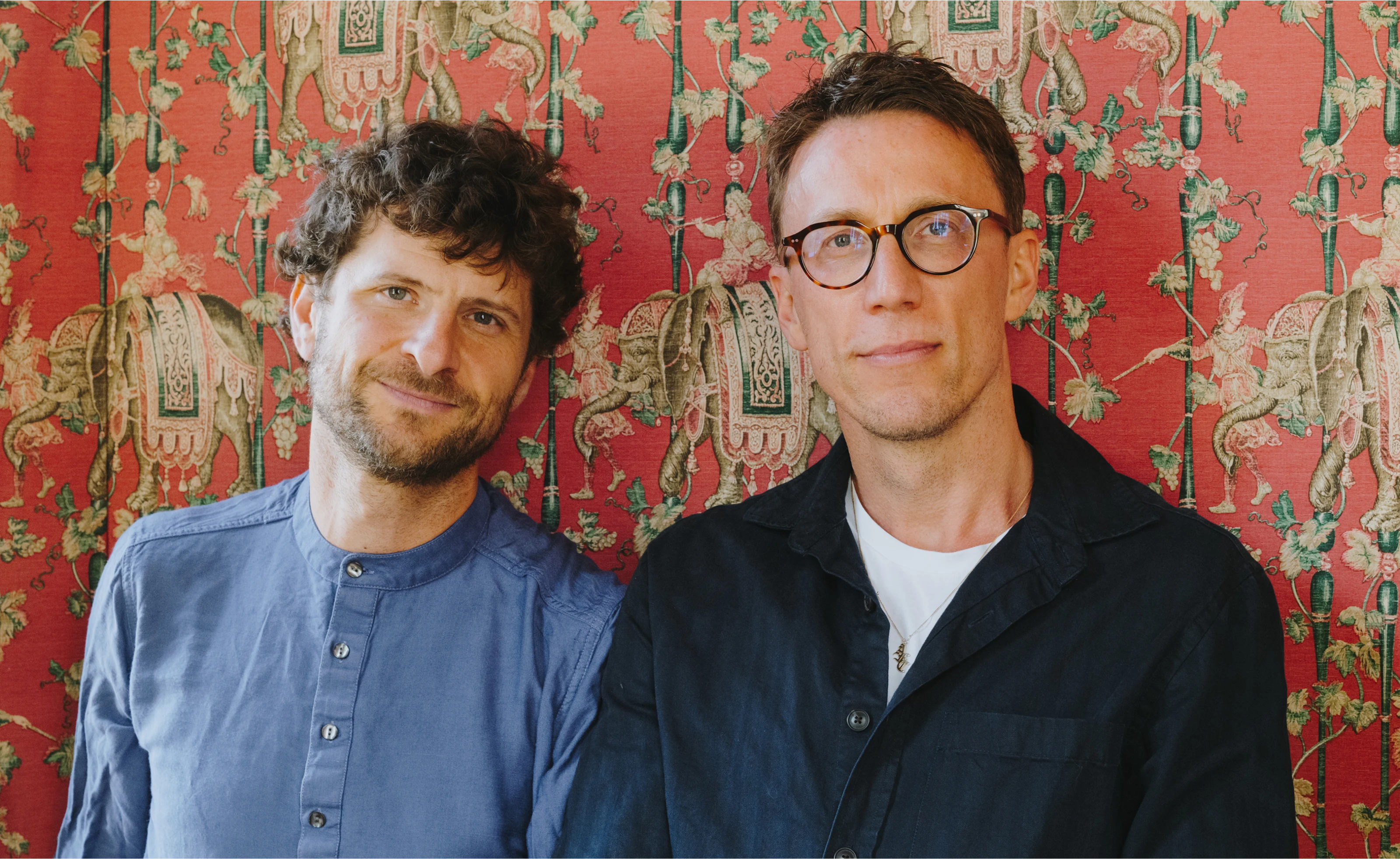
Citizens of the world. Michael League is an American bassist living in a small town in Catalonia. Bill Laurance is an English pianist who divides his time between the UK and the US. This duo is best known for having made Snarky Puppy one of the leading bands on the 21st-century jazz fusion scene, steering the genre away from the sterile virtuosity that had plagued it in the 1980s and bringing it closer to hip-hop and neo-soul. But when talking with them, the conversation leans as much towards Bill Evans as it does to Stravinsky, the Stone Roses and Turkish music.
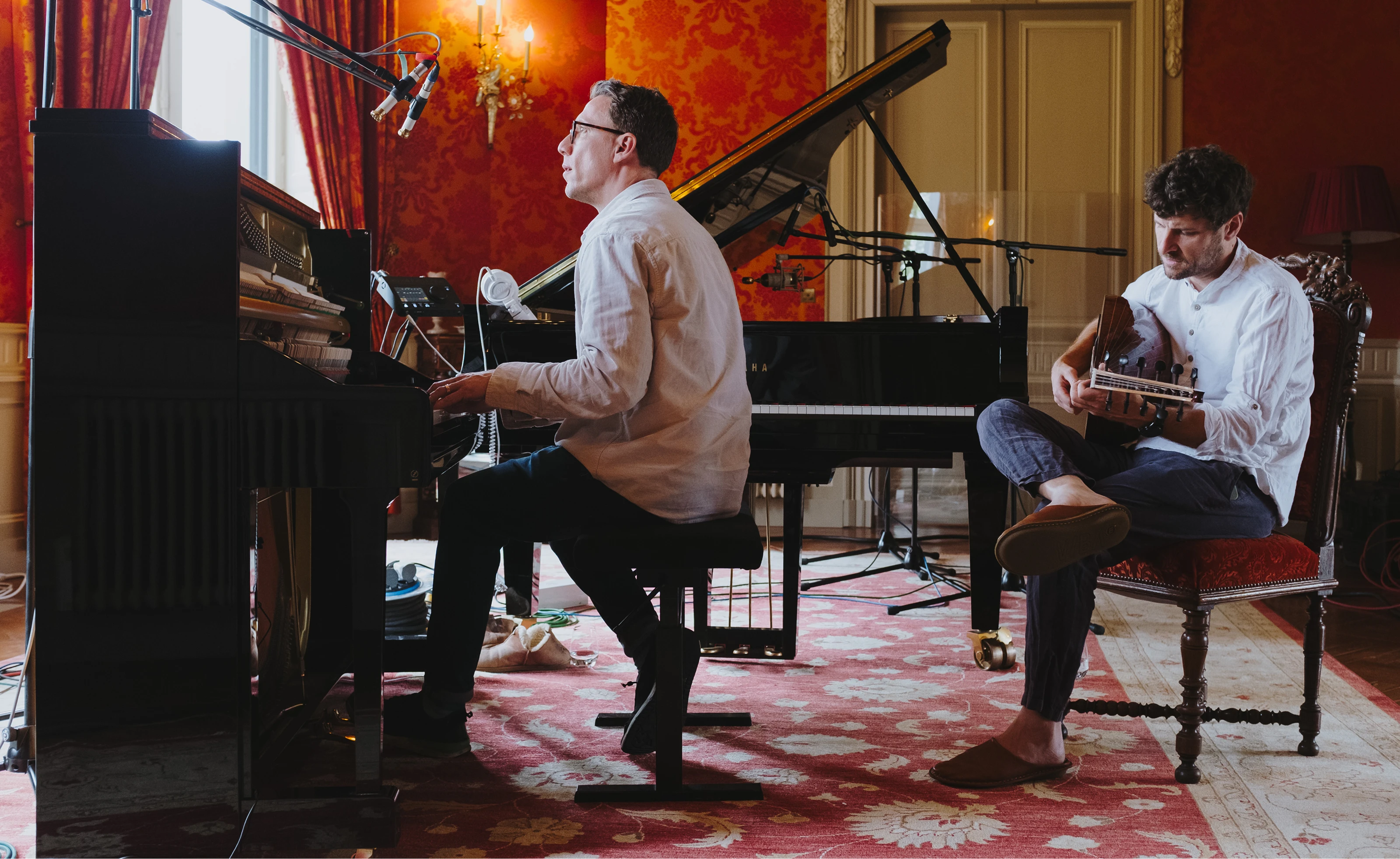
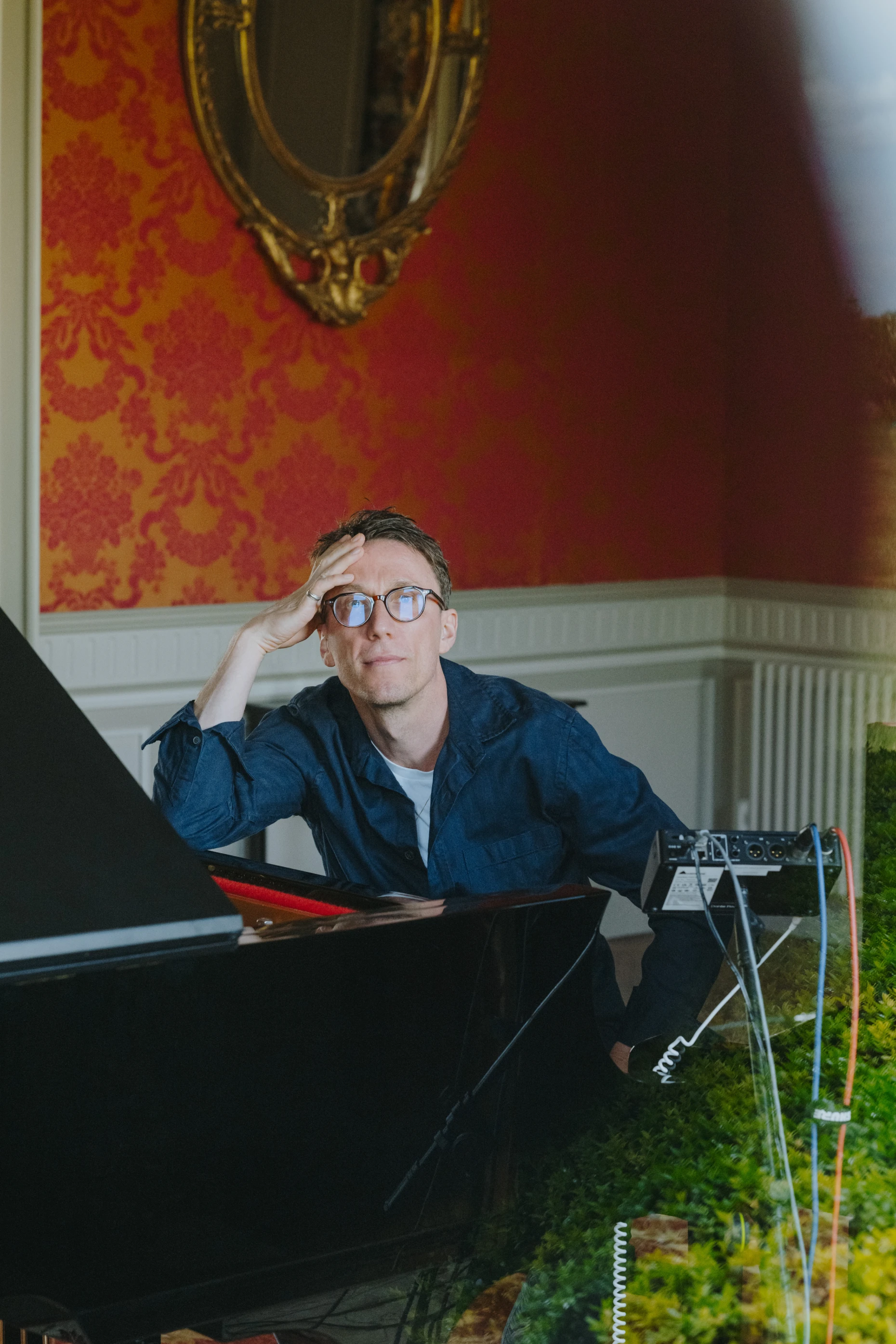
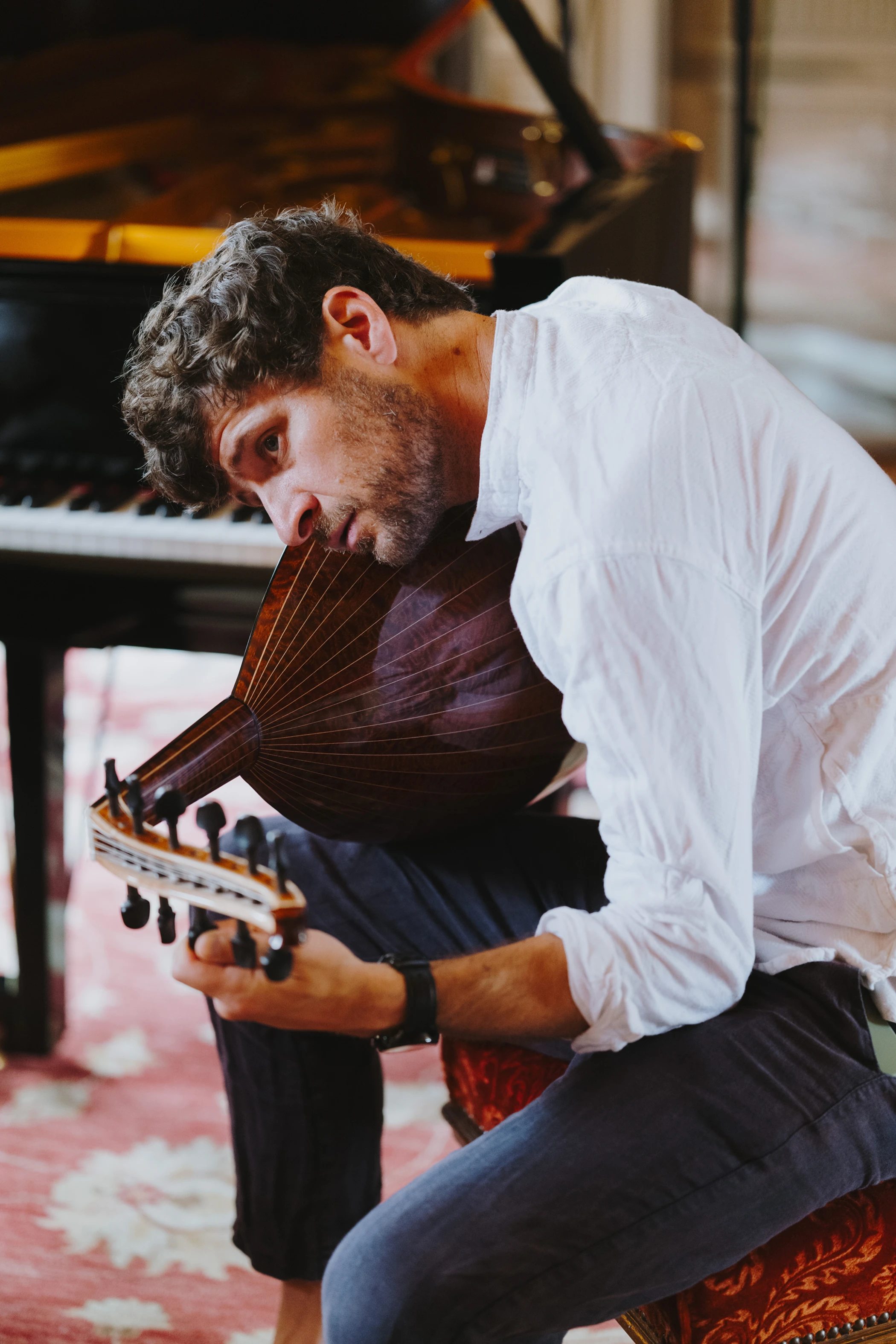
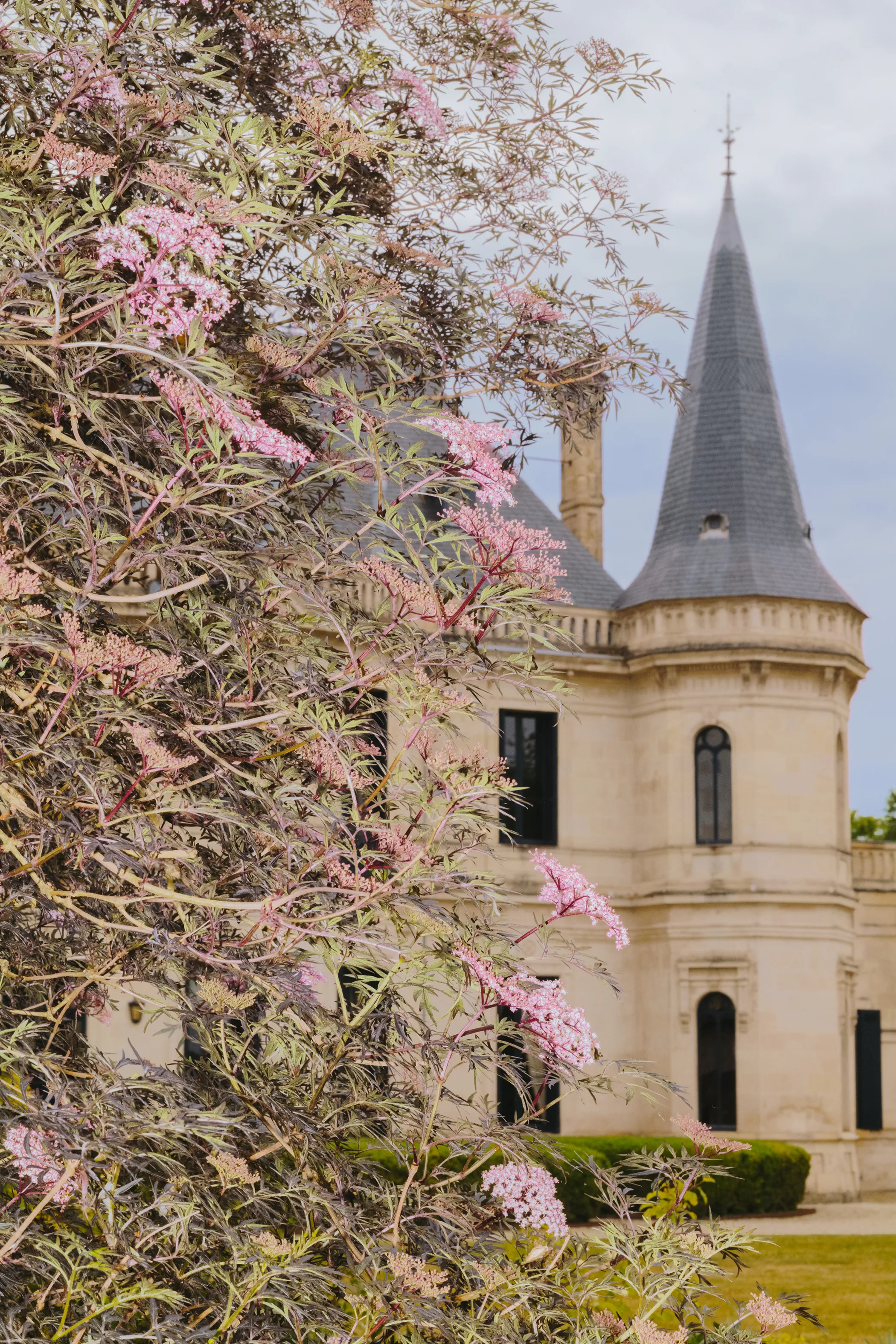
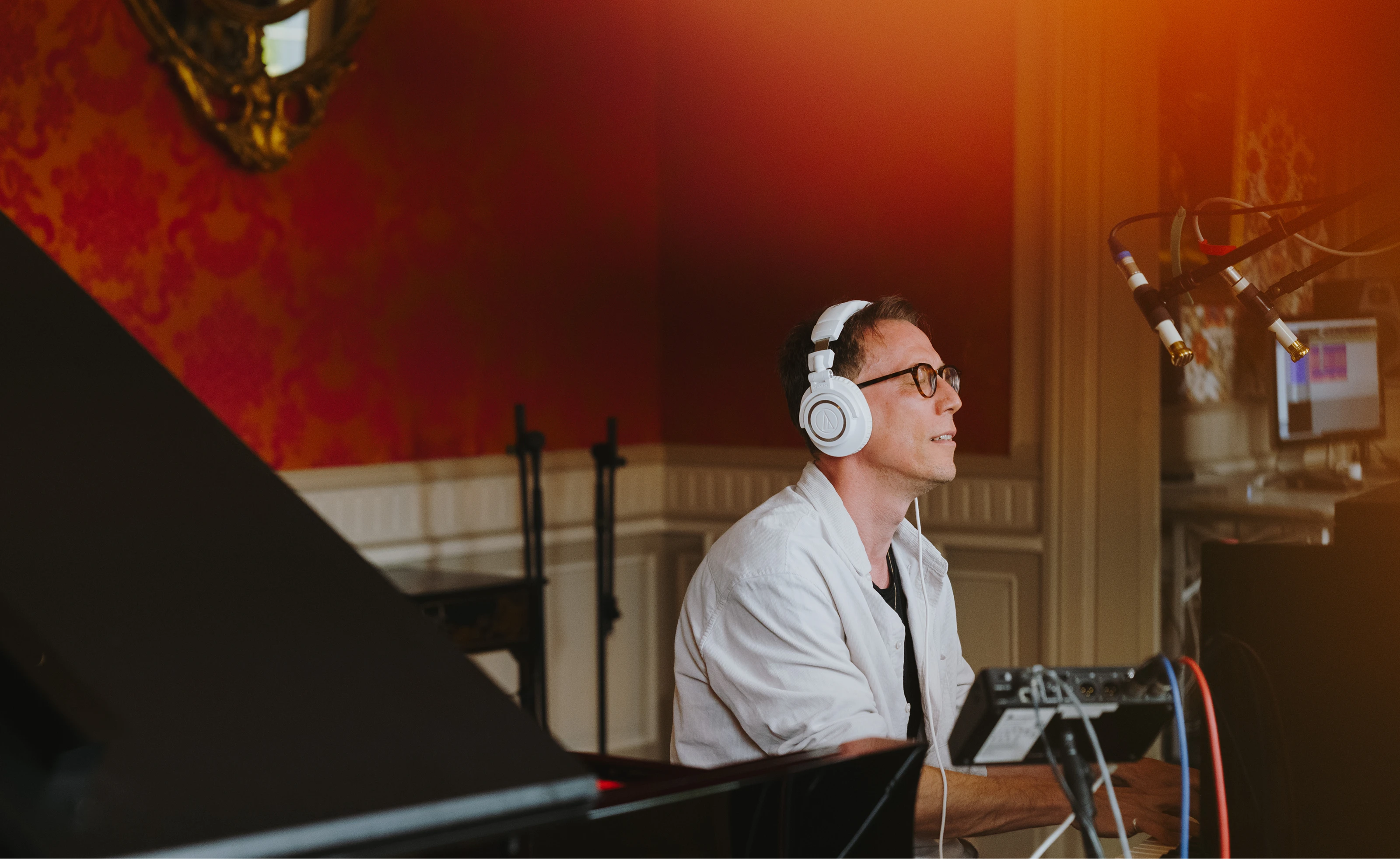
All of this, and other influences besides, is reflected in the château’s salons where the duo sets up their instruments. An oud and an acoustic bass for Michael; a grand piano and an upright piano for Bill. This project is resolutely acoustic and minimalist. A departure from the norm or a parallel path for a band who are here to stay. In fact, this album recorded at Château Palmer will be their third as a duo, under the guidance of Nic Hard, Snarky Puppy’s sound engineer, who has also worked with Ute Lemper, Harold López-Nussa and Youssou N’Dour.
Château Palmer: This recording at Château Palmer is your duo’s third album. What has changed the most compared to the previous two?
Michael League: The first two albums were recorded in my studio, where I have everything I need to isolate and control the sound. We didn’t have any of that here, so we chose to let the sounds from outside come through the microphones. It was lovely to incorporate the birds, the wind and the people passing through the village.
Bill Laurance: The biggest difference is the château. During a recording, I think that we should aim to capture everything that makes up the musical moment. At Palmer, we were surrounded by a certain kind of reverberation, birdsong, and the sounds of people coming and going. These are all sounds that we would normally eliminate in a conventional recording studio, but we actually tried to make something of them because being here was such a unique experience.
“We chose to let the sounds from outside come through the microphones.”
Michael League
Château Palmer: Did that atmosphere influence your playing?
Michael League: Being welcomed into such an incredible place inevitably changes things. As does having people serve you carefully prepared meals, or being able to focus on the album you are working on. When you are in a place where everything is done to such a high standard, it pushes you to the highest standards yourself.
Bill Laurance: Whilst playing, I could see the vineyards and hear the wind in the trees. I think it’s important to maintain an instinctive connection with nature. In London, I have a studio at the back of my garden where I have planted tall grasses. I watch them dance whilst I play. Here, there was something very inspiring about being immersed in such an environment and a place where wine of this quality is produced – something that demands attention to detail, perseverance and a long-term commitment. The more time you spend on things of value, the greater that value is likely to be. At the moment I am working on letting the music tell me what to play, not forcing things, but letting them come naturally. And there is no better place to achieve that than a château like this one.
Château Palmer: This duo has been described as an “anti-Snarky Puppy” project. Do you agree?
Michael League: Yes, definitely. Our duo is very minimalist, whereas Snarky Puppy is maximalist. We don’t use drums or electronic keyboards, whereas these instruments play a very important role in Snarky Puppy. In terms of aesthetic, we are polar opposites. One similarity between the two bands is that we try to get the most out of the songs, to tell a story. A reason that Snarky Puppy has enjoyed such success on the “jazz and related genres” circuit is because we placed the concept of the song at the heart of our work right from the start.
In the jazz world, songs are generally just a pretext for improvisation, but for us, they are the very heart of our music. There may be some improvisation on the edges. In Snarky Puppy, and also in this duo, we play pop. There might not be a singer, but it’s pop. The idea is always to say a lot with very little.
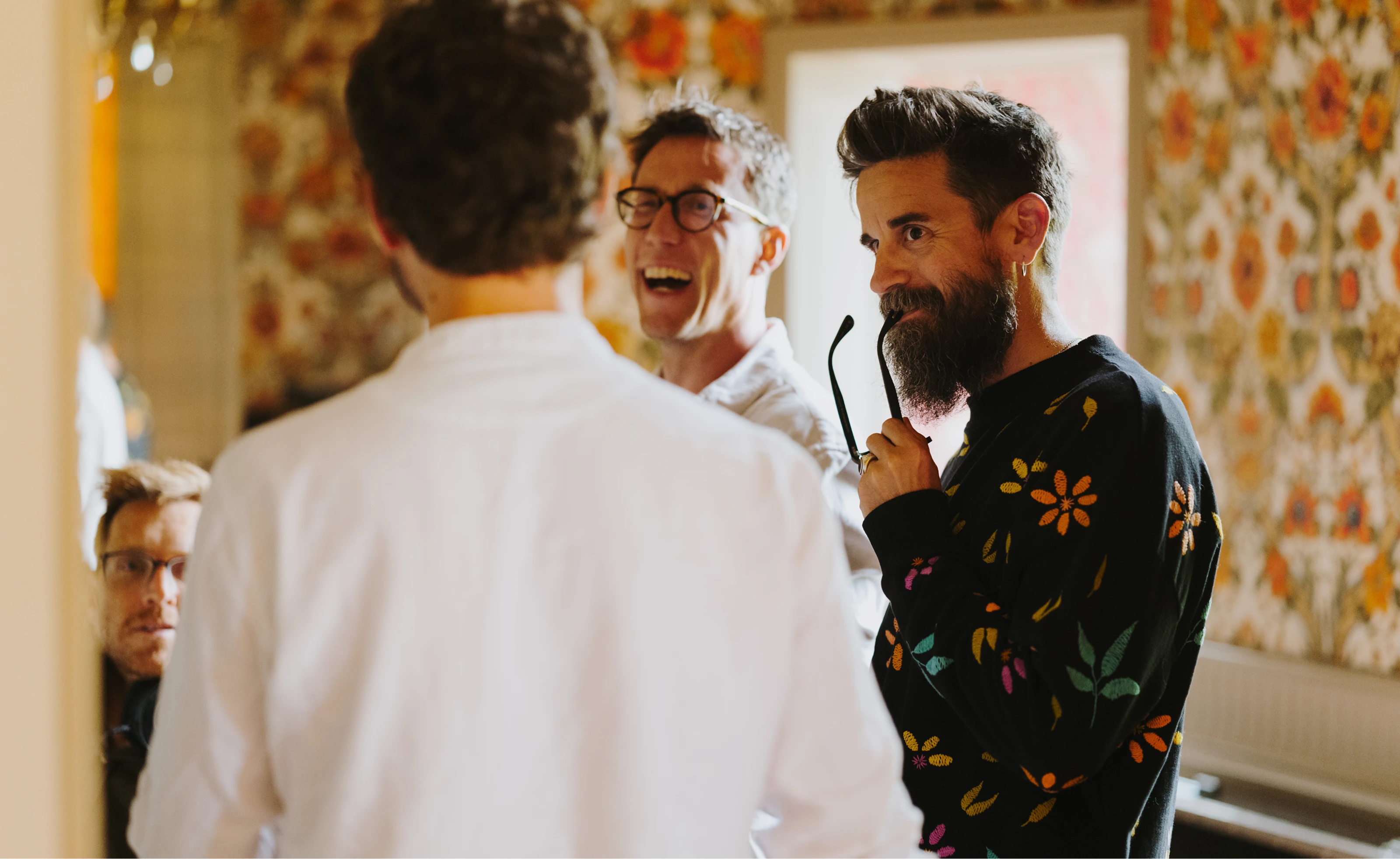
Bill Laurance: Whatever the band, the idea is the same: to write songs and showcase them. What changes is the dynamic. As there are only two of us, the range of sonic dynamics we can explore is broader. The other thing we have in common with Snarky Puppy is the concept of dialogue and exchange. Except that here, the conversation takes place solely between two musicians. Above all, this duo is a testament to our friendship and our shared love of different world music.
In this project, we don’t rule out any genre or influence. What Michael and I have always sought to express is that “music is music.” Whatever the style, the building blocks of music remain the same. When Mike plays the oud, an instrument usually associated with the Middle East, he isn’t trying to fit into that tradition. He approaches it with his own sensibility, which incorporates elements of blues and Latin American music. He shows that there are no barriers between genres, that music is a universal language. We have been lucky enough to travel all over the world, meeting other musicians who have introduced us to the music of their countries. This project enables us to bring all these influences together. We can play a blues tune, a pop song, a samba, or a Turkish five-beat rhythm. Anything is possible.
Château Palmer: What do you enjoy about playing 100% acoustic?
Michael League: That the volume is low. It’s nice to play softly. With Snarky Puppy, there were times when I’d get fed up with being on stage after an hour and a half, and stop caring about the quality of what we were playing, because the sound was too loud. With this duo, we have played concerts lasting an hour and forty minutes, and I felt I could have carried on for another two hours, simply because my ears were still fine. What I also love is the great freedom that acoustic music offers. We have a wider range of dynamics and can express so much by playing with that variety. I love that.
Bill Laurance: The acoustic signal is the source of music. An instrument resonating in a room is a fundamental vibration, a physical experience. In the past I have toured with a whole arsenal of keyboards, drum machines and samplers; these days I’m turning more and more to just the piano. When there is nothing electronic, there is nothing to hide behind. You have to seek out the truth.
“When there is nothing electronic, there is nothing to hide behind. You have to seek out the truth.”
Bill Laurance
Château Palmer: How did you choose the instruments you used for the recording?
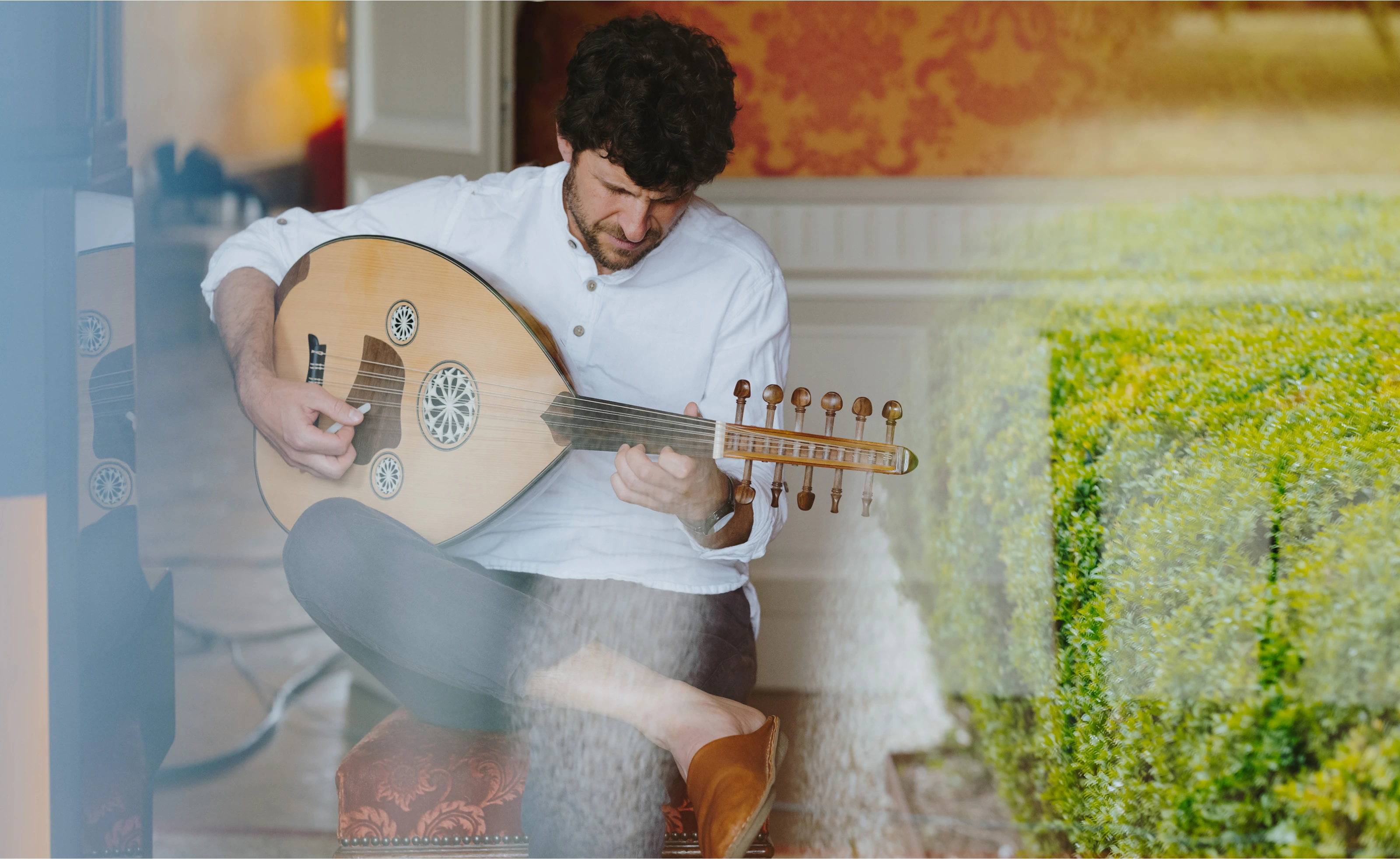
Michael League: This is my usual set-up: an oud and an acoustic bass. What I like about this bass is that it sounds neither like a bass guitar – electric or acoustic – nor like a double bass. It sits at the crossroads of all those sounds. As for the oud, I brought three, but they are all Turkish and tuned in the same way. The difficulty with this instrument is that you never know how it’s going to sound depending on the room and the other instruments involved in the recording. So it was good to have several options.
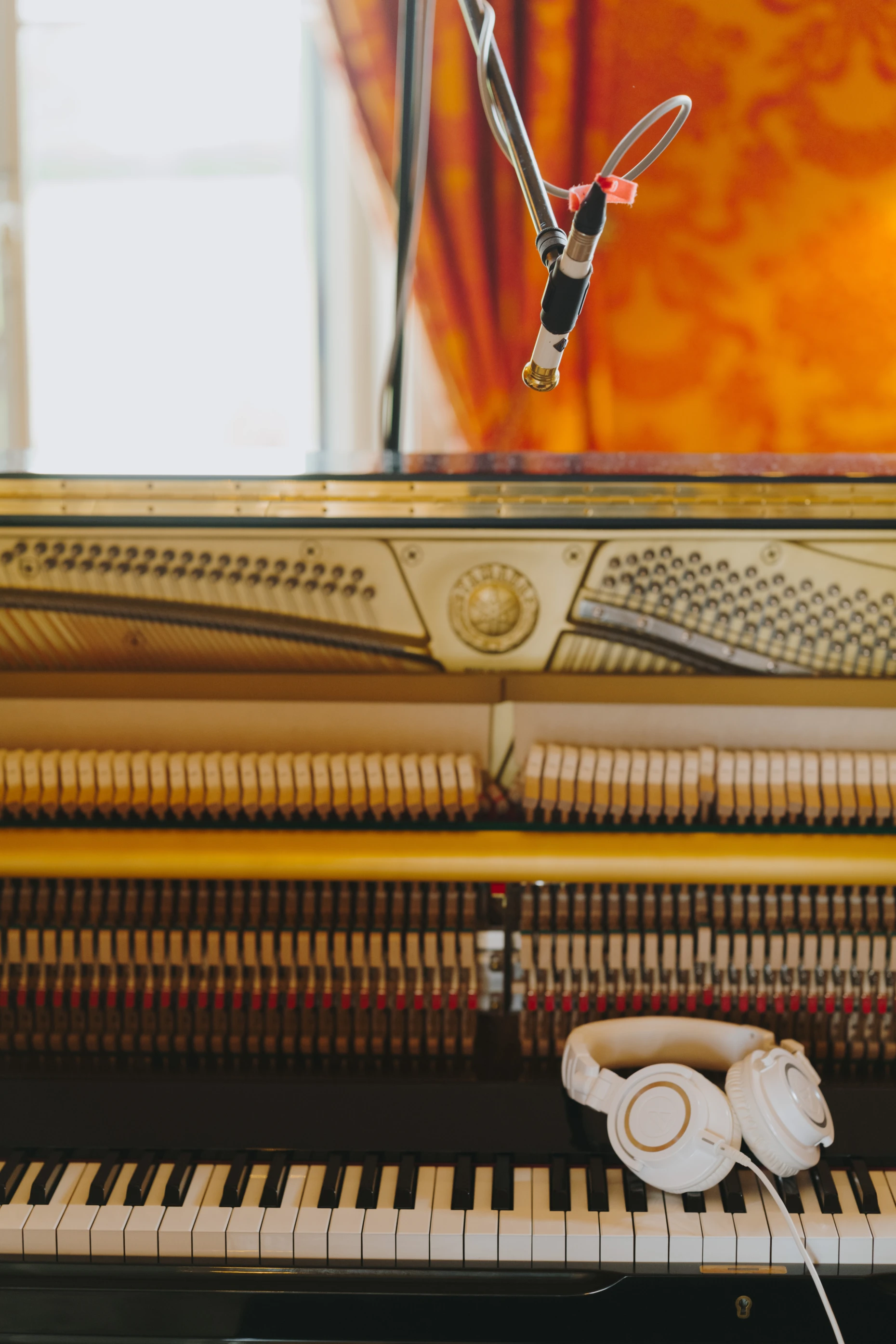
Bill Laurance: The grand piano is a Yamaha CFX – a breathtaking instrument with a fabulous action that allows you to play very loudly or very softly. Alongside that, I had a U1 upright piano, with a piece of felt between the hammers and the strings. That softens the attack and the sound is much more muted. This combination ultimately blends very well with the oud and the bass, narrowing the frequency range to leave more space for the melody. It opens up a huge range of possibilities when I am creating. I can play very soft chords whilst having a much clearer melody on the grand piano, or instead a deeper bass line on the grand piano and a soft melody on the upright piano.
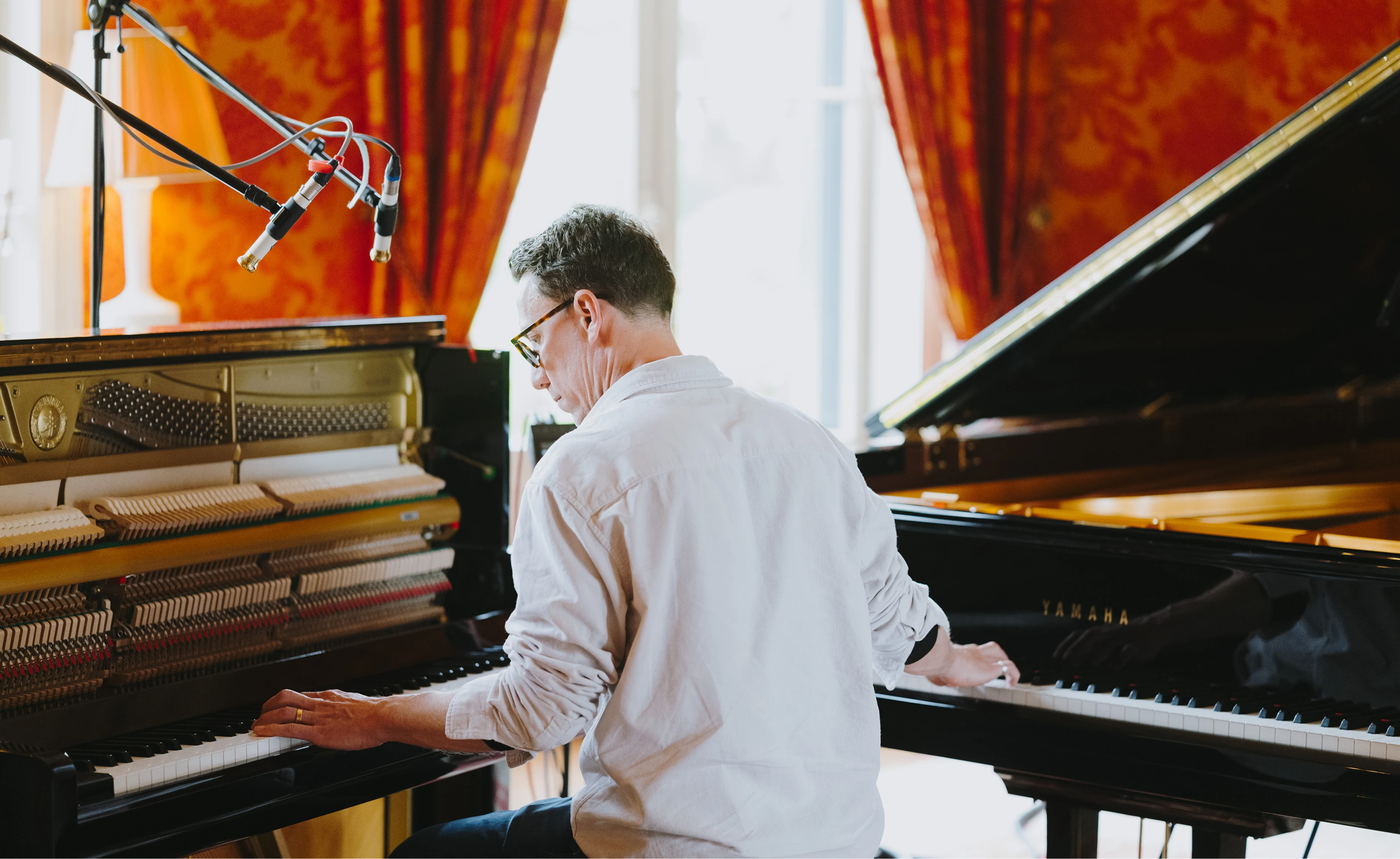
Château Palmer: You recorded in two different rooms. Was it difficult being unable to see each other whilst you were playing?
Michael League: No, before the recording we had defined the precise number of bars for each section in each piece. And when some sections were left open, we trusted each other. Each of us knows how to spot the moment when the other wants to move on to the next section. We know each other very well!
Bill Laurance: We have been working together for 22 years. We know how to avoid certain pitfalls. We prepared the tracks very carefully. As our schedule was tight, the structures had to be clear. Before the recording session, we sent each other lots of demos. We discussed things at length and knew exactly what we wanted when we arrived at Château Palmer.
Château Palmer: Did you write any songs specifically for this session?
Michael League: We arrived with a list of songs that we had prioritised, and we adjusted that order based on how things were going during the sessions. Sometimes it took three and a half hours for a track to come to life; sometimes it happened in three minutes. We worked on each track until we felt there was no point in carrying on. Our songs already had a fairly precise structure by the time we went into the studio, but we were able to say, “Let’s take this chorus out,” “Let’s repeat this bridge” or “Let’s put a solo in here.” What we didn’t change were the melodies.
Bill Laurance: We had written about 15 tracks. The idea was to record them all, then see which ones really moved us, which reflected the full range of emotions and influences we wanted to express. That could be blues, soul, jazz, pop, reggae, classical music, electronic, grunge, Middle Eastern music, anything! There was a lot of back-and-forth. When one of us would start a chord progression, the other would add a melody. What makes this project so special is the space we give each other.
Château Palmer: As a duo, do you find yourselves trying to fill the soundscape more than you do with Snarky Puppy, where there are eight of you?
Michael League: No, when we first started this duo, we did tend to fill the soundscape because we felt vulnerable, but over time we have realised that we actually need to do the opposite: make the soundscape the third member. We let the music breathe, playing a long chord rather than a rhythmic figure, or letting a note resonate rather than repeating it. Our first album as a duo was already guided by this idea of minimalism, but we still tended to seek a certain sonic richness by recording overdubs after the first take. That is something we completely did away with on the second album. We said to ourselves, “Let’s keep it live and natural,” and the result struck us as much better. This third album takes that approach even further: we are simply in a house, playing, with birds singing and people passing by around us. And that’s what we’re recording.
Bill Laurance: What is needed is to make the right choices – the ones that serve the composition. With this duo, we are all about “less is more.” The less we play, the less we layer the harmonies, the more direct the result can be. We are constantly trying to strip the tracks back to find what gives them their essence, keeping only what tells a story. This project is the opposite of Snarky, where we have a whole sonic texture to play with. This also works thanks to the chemistry between Michael and me – the magic that allows us to respond to each other. Even though we like to give one another very precise instructions, we try as much as possible to let that spontaneity come through.
“We let the music breathe”
Michael League
Château Palmer: Ultimately, would you say that Château Palmer was one of the defining influences on this album?
Michael League: Yes, it was more or less the third member of the band! When you listen to these songs, you can hear the château, the countryside, the life that breathes through this place.
Bill Laurance: This collaboration between ACT and Château Palmer is a wonderful idea, a beautiful story of trust. Michael and I wanted to be part of it. And in the end, perhaps all we did was channel the spirit of this place steeped in history.
“When you listen to these songs, you can hear the château, the countryside, the life that breathes through this place.”
Michael League
Photographs by Letizia Le Fur.
CLOSE TO HOME was recorded by Michael League and Bill Laurance at Château Palmer in late spring 2026. The album will be released on 13 November 2026 by ACT Music on CD, LP and digital formats. A special “Edition IV”, pressed on 180-gram audiophile vinyl, will accompany the release. CLOSE TO HOME marks the fourth collaboration between Château Palmer and the legendary German label ACT.